Spencer Finch: Light, Time, Chemistry
Spencer Finch's show at Rhona Hoffman Gallery is a photo based exploration of the processes and interactions of light, time, and chemistry-- three variables inherent in the practice of traditional photography. The work aims to capture and re-contextualize the ephemerality of these elements in our surroundings and explore the phenomenology of their experience. The tone of the show is set by Periscope, which dominates the front room of the gallery and addresses all three processes simultaneously. Periscope is a photographic device composed of mirrors and ventilation ducts extending from outside and ending in front of an interior gallery wall directly onto which a cyanotype was made from a two day exposure of the Chicago sky. A cyanotype is one of the earliest forms of fixing an image through light, and its use here creates an interesting connection between historical processes and present experience. The resulting image is a hazy blue and white (blue because of the chemicals used in cyanotypes), not really a pictorial image at all, but rather an impressionistic record left by the light. The cyanotype is representative of how Finch handles time throughout the show-- whether capturing the ephemeral either by condensing it by long exposure or parsing it out into exposures at intervals-- the presence of time is of central importance, more important even than the image itself.
Shadow, Sculpture of Centaur, Tuileries (After Atget), turns time back on itself in a way by reconstructing an ephemeral quality of light from a photographic source. This piece is a fluorescent tube light covered at different intervals with colored filters designed to act as a reverse prism to re-create the light in a particular Atget photo of Paris in the corner of the gallery. The notion of re-creating something so fleeting from a photograph reverses the relation of light and photography. Photography is always, in its essence, a picture of light, but in this case, light is reacting to a photograph in a way that rarely if ever happens. This piece also brings the historical into the present, in a more subjective way than the cyanotype does. It begins to address Finch's interest in the difficulties and disappointments of recollection by blurring the line between preset reality, memory, and documentation of the past.
Shadow... shares the quality of Finch's better work in the way it addresses the specific medium of photography and plays with our understanding of the purpose of photography as a medium. Another work which succeeds in this area is Thank You, Fog, a series of sixty images from a stationary camera shot at one minute intervals as fog rolls over a densely wooded landscape. The images wrap the full length of a room, and each one is almost the same yet slightly different as the fog exposes or conceals different parts of the image. Ultimately, no one photo could be deemed a more complete representation than any other, reflecting Finch's interest in the "anti-image", the fact that none of the sixty pictures give us a full picture of the landscape. Even setting up the camera in a mechanically operated way to take photographs at pre-specified intervals, each image ends up being subjective by it's very definition of being a single moment in time. We can get an impression of the landscape, but no definitive description.
Hidden behind the curators desk is One Donut Twelve Times, Twelve Donuts One Time, a work that addresses the subjectivity of photography in relation to light as opposed to time. Donuts... is a diptych, each side of which is a gridded montage of just what the title states. On one side, twelve different donuts, shot in a standardized manner look remarkably interchangeable from a distance, while on the other side, one donut shot at varying angles, exposures, and lighting look in fact like twelve different donuts. This extremely simple idea highlights the amount of impact even the most basic interpretations on the photographers part can have on the resulting image. Of all Finch's show, this work is arguably the most literal in its portrayal of an actual pictorial image. However, it is also extremely relevant, especially with the advent of digital imaging and a reassessment of photography's value. What Donuts... reveals is the amount of interpretation that even the most basic image is subject to, thereby questioning photography's innate "truth", regardless of the capability of digital manipulation.
Finch's work is in sum a series of impressions blending light, time, and chemistry together. The least successful work in the show is in fact that which comes closest to documenting the ephemeral without recognizing that such documentation inherently negates this very quality. For example Lemon Tree (Spain 6/27/07, 8am-7pm), in which the tree is photographed at different times of day ends up feeling more like a simple painterly exercise or one we have seen before and much better in the likes of Monet's haystacks. Although at times, the show felt slow and needlessly repetitious (I'm not sure the sixty photographs of Thank You, Fog substantially more effective than thirty would have been), I could not help but believe this was a conscious effect generated by the work, and in a way it did allow for the processes of memory and perception and present to overlap in the viewing. In the end, it is really the very failure of Finch's work to capture ephemerality that speaks the most about the nature of perception and places his work on the border of experience and memory.
Thursday, April 23, 2009

Friday, April 10, 2009
Fritz Haeg
Fritz Haeg's work incorporates a range of disciplines including teaching, gardening, architecture, art, and even ecology. Haeg's formal training was in architecture, and while he has moved away from the traditional practice of it, his work employs many architecturally influences notions about space. Three of his major ongoing projects are "Sundown Schoolhouse", "Edible Estates", and "Animal Estates". Sundown Schoolhouse is a small educational venture run out of Haeg's geodesic home in LA, and in each session includes about 9 students and numerous guest instructors in disciplines ranging from yoga to literature as part of a holistic programs conceived by Haeg. Schoolhouse grew out of frequent semi-public gatherings Haeg had already been having at his house, a practice he initiated when he moved to LA from New York and developed his interest in teaching. Haeg said that when he stopped making Art, upon his move, was actually when he started seriously making work. Edible Estates is a project which transforms typical front yards into gardens full of food-producing plants, and has been enacted on several sites throughout the US and abroad. Each garden serves as an example of a creative way existing space could be re-worked to be more productive and green, and to fuse back functionality with pleasure-- aspects often separated in modern design. The gardens also serve as a catalyst for spreading this idea through photos, stories, pamphlets related to the transformation, and become a public opportunity for learning in a private space. In a similar vein, Animal Estates focuses on creating habitats for native animals in urban areas they have been driven out of, and (as in Edible Estates) using the creation of this habitat as an opportunity to educate through further materials such as performances or writings. For example, the first incarnation of this project took place at the Whitney in NYC, and incorporated an eagle's nest and beaver pond in front of the entrance to the museum as well as performances by dancers and educational speakers about each animal inside.
Haeg made a distinction between a utopian ideal of starting over and his projects which seek to deal within the reality of what already exists. I found his work all the more interesting precisely because, although inherently optimistic, it was also realistic. He stated repeatedly that his intention was not to tell people what to do or even to take on grand scale projects, but that the success of his project lay simply in people stopping to think about what could be the potential if everyone did something like make their yard into a garden. I thought this notion was very successful in the case of Edible Estates, because the effect is really so accessible to any individual with a yard, and the possibility of growing one's own food therefore so realistic. I think I would question a bit more the reality behind the Animal Estate project, simply because building a beaver pond in front of the Whitney in NYC is not going to have any immediate effect on bringing any beavers right to the middle of Manhattan. Finally, Haeg brought up the question of why optimism is often written off whereas cynicism so readily accepted, and where his art fits into the spectrum. I thought his work's optimism in the context of realism ends up being much more original and relevant in this case than pure cynicism would be, and his proactive approach to applying his knowledge in a way dictated by personal interests rather than recognition by existing systems particularly relevant to art today.
Haeg made a distinction between a utopian ideal of starting over and his projects which seek to deal within the reality of what already exists. I found his work all the more interesting precisely because, although inherently optimistic, it was also realistic. He stated repeatedly that his intention was not to tell people what to do or even to take on grand scale projects, but that the success of his project lay simply in people stopping to think about what could be the potential if everyone did something like make their yard into a garden. I thought this notion was very successful in the case of Edible Estates, because the effect is really so accessible to any individual with a yard, and the possibility of growing one's own food therefore so realistic. I think I would question a bit more the reality behind the Animal Estate project, simply because building a beaver pond in front of the Whitney in NYC is not going to have any immediate effect on bringing any beavers right to the middle of Manhattan. Finally, Haeg brought up the question of why optimism is often written off whereas cynicism so readily accepted, and where his art fits into the spectrum. I thought his work's optimism in the context of realism ends up being much more original and relevant in this case than pure cynicism would be, and his proactive approach to applying his knowledge in a way dictated by personal interests rather than recognition by existing systems particularly relevant to art today.
Wednesday, April 8, 2009
Top 5
1. Coraline
Coraline is the perfect blend of childhood fantasy mixed with a subtle horror that keeps the story engaging for adults as well as children. Coraline discovers an alternate version of her life through a door in her living room. In this at first wonderful other world her parents are attentive, her neighbors more interesting, the garden blooming, toys magical, and the only disconcerting aspect the fact that everyone has buttons for eyes. Coraline's night time adventures soon turn dangerous, however, when she discovers her "other mother" wants to keep her forever, and all Coraline must do to stay in this happy world is sew buttons over her eyes too. In addition to this story, the film's incredible use of 3-d stop-motion animation further brings to life Coraline's worlds in incredible detail. This movie thoroughly transported me into this strange and fascinating world and left me thinking about it for days (now going on months).

2. Uglydolls
Uglydolls are more like weird monster stuffed animals-- somewhere in between Sesame Street and some Nickelodeon cartoon. Despite being named "dolls", Uglydolls have a wide appeal that crosses genders, and have none of the cutesy appeal of beanie babies or other stuffed doll fads. Instead it is precisely their weirdness and indeed "ugliness" that makes them so interesting and funny. Uglydolls are supremely simple in their design, essentially they are two pieces of felt-like fabric sewn together, stuffed, and decorated with round felt eyes and triangle felt teeth. Despite this simplicity, they come in many characters and colors, each accompanied by a name and description equally as idiosyncratic as the dolls themselves.
"Ice-Bat comes from an Ice Cave and loves hiding inside ice Chests.
Everything he touches turns to ice...
Ice Bat thinks you are cool and he wants to chill with you.
He wants to hang out with you... or just hang upsidedown, if that's OK with you..."
All in all, it is this combination of idiosyncracy, simpleness, and weirdness that makes Uglydolls my favorite toy in recent memory.


3. Todd Hido's Homes at Night
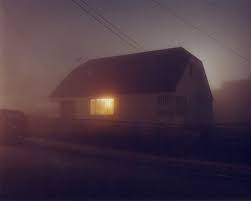
Todd Hido's series of photographs of homes at night is beautifully haunting and lonely. Hido's houses range geographically, seasonally, and architecturally, however all share a common photographic aesthetic. The color photographs contrast the warmth of light from inside the house (almost all Hido's houses have a light or two on inside) with the often foggy, cold, or murky exterior where we stand looking. Always devoid of people, Hido's work nonetheless strongly suggests their presence just behind the curtains, and this voyeuristic sense heightens the dynamic of loneliness we feel. Indeed this feeling is very real, as Hido works by driving through neighborhoods at night looking at and photographing strangers houses. When I first saw Hido's work I felt as if I was looking at the exact picture I wanted to take but hadn't yet figured out how to, and Hido's work has since had a strong influence on my own photography.


4. The Whorfian Hypothesis
The Whorfian hypothesis postulates the systematic and profound influence of language over thought. What or how one thinks is wholly determined by their language. This is the extreme end of the spectrum of thinking on language's influence on thought, more moderate views formulate questions for research such as "when and in what ways do linguistic categories shape thought?". There is a sizable body of psychology research showing the influences language has. For example, the negative effect of lack of a recursive counting system upon ability to distinguish between even small numbers such as 5 and 6, as well as the negative impact of verbal recall of perceptual memories such as eyewitness accounts of perpetrator faces. Without going into more specific details, the supported premise that the language we speak actually has a significant impact on the way we think (even when not thinking for speaking) is at once hard to comprehend-- since the task of separating out ingrained language patterns is nearly impossible-- and amazing in its implications for all different fields and cultural relations.
Coraline is the perfect blend of childhood fantasy mixed with a subtle horror that keeps the story engaging for adults as well as children. Coraline discovers an alternate version of her life through a door in her living room. In this at first wonderful other world her parents are attentive, her neighbors more interesting, the garden blooming, toys magical, and the only disconcerting aspect the fact that everyone has buttons for eyes. Coraline's night time adventures soon turn dangerous, however, when she discovers her "other mother" wants to keep her forever, and all Coraline must do to stay in this happy world is sew buttons over her eyes too. In addition to this story, the film's incredible use of 3-d stop-motion animation further brings to life Coraline's worlds in incredible detail. This movie thoroughly transported me into this strange and fascinating world and left me thinking about it for days (now going on months).
2. Uglydolls
Uglydolls are more like weird monster stuffed animals-- somewhere in between Sesame Street and some Nickelodeon cartoon. Despite being named "dolls", Uglydolls have a wide appeal that crosses genders, and have none of the cutesy appeal of beanie babies or other stuffed doll fads. Instead it is precisely their weirdness and indeed "ugliness" that makes them so interesting and funny. Uglydolls are supremely simple in their design, essentially they are two pieces of felt-like fabric sewn together, stuffed, and decorated with round felt eyes and triangle felt teeth. Despite this simplicity, they come in many characters and colors, each accompanied by a name and description equally as idiosyncratic as the dolls themselves.
"Ice-Bat comes from an Ice Cave and loves hiding inside ice Chests.
Everything he touches turns to ice...
Ice Bat thinks you are cool and he wants to chill with you.
He wants to hang out with you... or just hang upsidedown, if that's OK with you..."
All in all, it is this combination of idiosyncracy, simpleness, and weirdness that makes Uglydolls my favorite toy in recent memory.
3. Todd Hido's Homes at Night
Todd Hido's series of photographs of homes at night is beautifully haunting and lonely. Hido's houses range geographically, seasonally, and architecturally, however all share a common photographic aesthetic. The color photographs contrast the warmth of light from inside the house (almost all Hido's houses have a light or two on inside) with the often foggy, cold, or murky exterior where we stand looking. Always devoid of people, Hido's work nonetheless strongly suggests their presence just behind the curtains, and this voyeuristic sense heightens the dynamic of loneliness we feel. Indeed this feeling is very real, as Hido works by driving through neighborhoods at night looking at and photographing strangers houses. When I first saw Hido's work I felt as if I was looking at the exact picture I wanted to take but hadn't yet figured out how to, and Hido's work has since had a strong influence on my own photography.


4. The Whorfian Hypothesis
The Whorfian hypothesis postulates the systematic and profound influence of language over thought. What or how one thinks is wholly determined by their language. This is the extreme end of the spectrum of thinking on language's influence on thought, more moderate views formulate questions for research such as "when and in what ways do linguistic categories shape thought?". There is a sizable body of psychology research showing the influences language has. For example, the negative effect of lack of a recursive counting system upon ability to distinguish between even small numbers such as 5 and 6, as well as the negative impact of verbal recall of perceptual memories such as eyewitness accounts of perpetrator faces. Without going into more specific details, the supported premise that the language we speak actually has a significant impact on the way we think (even when not thinking for speaking) is at once hard to comprehend-- since the task of separating out ingrained language patterns is nearly impossible-- and amazing in its implications for all different fields and cultural relations.
5. Tronic Studio
Tronic is a computer animation/design studio in NYC I worked at last spring and summer. Working in broadcast, film, print, internet, and the environment, Tronic seeks to merge the overlapping boundaries of these varied mediums and use them to arrive at more creative solutions. Recent work includes spots for Sony, Diesel, Oracle, Discovery, and Samsung. I think Tronic's work is very interesting especially in its fusing of architectural knowledge into 3-d animation which creates a stronger structural feel to the work absent in some other computer graphics. The founders of Tronic in fact went to graduate school for architecture, and computer animation grew out of that. Additionally, Tronic was only founded in 2001 and as an 8 year old company has already found a niche in the business, which I think interesting in terms of finding a way to find success as an artist in the greater world.
www.tronicstudio.com
Amelia Jones. Performing the Wounded Body: A New Theory of Political Agency in the Visual Arts
In her lecture, art critic, historian, and curator Amelia Jones spoke about bodily wounding as art, and the components necessary for this type of work to be effective as a political agent rather than mere spectacle. Jones began by discussing the importance of contexts of wounding. On a basic level, there is the difference between wounding against one's will and wounding in which one knowingly engages, and this complicity is what makes wounding as art possible at all. Another important context is that which takes the wound beyond the physical act and into something representational of a larger form of suffering which then allows the wounding to act as a political statement. For example, in his performance "Close the Concentration Camps", Mike Parr sat with his mouth, eyes, ears, and nose sewn up, with the word "alien" branded into his thigh to protest the operation of Australia's detention centers. This performance piece links strongly to non-art centered means of garnering media attention like Abas Amini's sewing of his eyes and lips shut to demand rights for asylum seekers like himself.
Jones goes on to discuss the wound as representational and aestheticized. In order for wounding to be politically successful, it must ultimately generate a response of empathy in viewers, that although you can't feel how the artists pain feels, you feel you know how they feel. In order to do this, the wound must be real, or at least perceived as real, because it is the perception of it having occurred in an actual body and thus potentially in our own body that gives it significance. Ultimately, the political influence of wounding lies in the sublimation of reactions into action. This is the idea that the response to suffering, be it anger, emotional attachment, aesthetic response, eventually leads to sublimation, the Freudian concept of taking baser instincts and turning them into a higher form such as art or political action. At the same time, it is the aestheticizing of the wound which can be essential to prevent the wounding from becoming simply sensational, like pictures of prisoner torture in Iraq became. Aestheticizing helps the wound to be understood as metaphorical, in which sense we can look past the immediate urge to stop this particular person from hurting themselves to the greater implications. For example, Ron Athey's work often involves penetration of body orifices and other self wounding in reference to his own and others suffering of living with HIV, and his performances are often photographed by photographer Cathy Opie, in a highly aestheticized manner.
Despite Jones' assertions about the effect of empathy, sublimation, and representation in wounding, I am still left questioning the basic efficacy and legitimacy of wounding in art. The aspect I find most difficult to distinguish in my mind is the difference between types of wounding. The distinction between self-inflicted versus unwilling wounding is clear, however, outside of that, the lines between forms of self-inflicted wounding run together. From a psychological point of view, self-mutilation is an expression of psychological pain into physical pain, which seems mirrored by the intent of performance artists. Is it simply the different aesthetic qualities between these two practices that socially and politically legitimizes one, or the fact that one is performed in front of an audience while the other is deeply personal? I no doubt have an intense emotional reaction to acts of wounding, but I question the ways in which my reaction is mediated by any "sublimation" of empathy. I think the presence of such deep psychological pain and suffering is terribly sad and tragic, and in that way feel a sincere empathy with the artist or individual. My understanding even goes so far as understanding of the desire that goes along with translating psychological pain into something tangible, and the release this gives. That said, I guess the problem that remains for me in the transformation of this into art is that I think it cannot avoid becoming a spectacle, whether properly aestheticized or not, I think it becomes a spectacle in the same way mental illness becomes one. If this is true, wounding cannot ever really be fully successful in accomplishing any permanent political effect, and when unsuccessful in this, comes back to being merely a question of the welfare of the individual involved.
Jones goes on to discuss the wound as representational and aestheticized. In order for wounding to be politically successful, it must ultimately generate a response of empathy in viewers, that although you can't feel how the artists pain feels, you feel you know how they feel. In order to do this, the wound must be real, or at least perceived as real, because it is the perception of it having occurred in an actual body and thus potentially in our own body that gives it significance. Ultimately, the political influence of wounding lies in the sublimation of reactions into action. This is the idea that the response to suffering, be it anger, emotional attachment, aesthetic response, eventually leads to sublimation, the Freudian concept of taking baser instincts and turning them into a higher form such as art or political action. At the same time, it is the aestheticizing of the wound which can be essential to prevent the wounding from becoming simply sensational, like pictures of prisoner torture in Iraq became. Aestheticizing helps the wound to be understood as metaphorical, in which sense we can look past the immediate urge to stop this particular person from hurting themselves to the greater implications. For example, Ron Athey's work often involves penetration of body orifices and other self wounding in reference to his own and others suffering of living with HIV, and his performances are often photographed by photographer Cathy Opie, in a highly aestheticized manner.
Despite Jones' assertions about the effect of empathy, sublimation, and representation in wounding, I am still left questioning the basic efficacy and legitimacy of wounding in art. The aspect I find most difficult to distinguish in my mind is the difference between types of wounding. The distinction between self-inflicted versus unwilling wounding is clear, however, outside of that, the lines between forms of self-inflicted wounding run together. From a psychological point of view, self-mutilation is an expression of psychological pain into physical pain, which seems mirrored by the intent of performance artists. Is it simply the different aesthetic qualities between these two practices that socially and politically legitimizes one, or the fact that one is performed in front of an audience while the other is deeply personal? I no doubt have an intense emotional reaction to acts of wounding, but I question the ways in which my reaction is mediated by any "sublimation" of empathy. I think the presence of such deep psychological pain and suffering is terribly sad and tragic, and in that way feel a sincere empathy with the artist or individual. My understanding even goes so far as understanding of the desire that goes along with translating psychological pain into something tangible, and the release this gives. That said, I guess the problem that remains for me in the transformation of this into art is that I think it cannot avoid becoming a spectacle, whether properly aestheticized or not, I think it becomes a spectacle in the same way mental illness becomes one. If this is true, wounding cannot ever really be fully successful in accomplishing any permanent political effect, and when unsuccessful in this, comes back to being merely a question of the welfare of the individual involved.
Subscribe to:
Posts (Atom)